
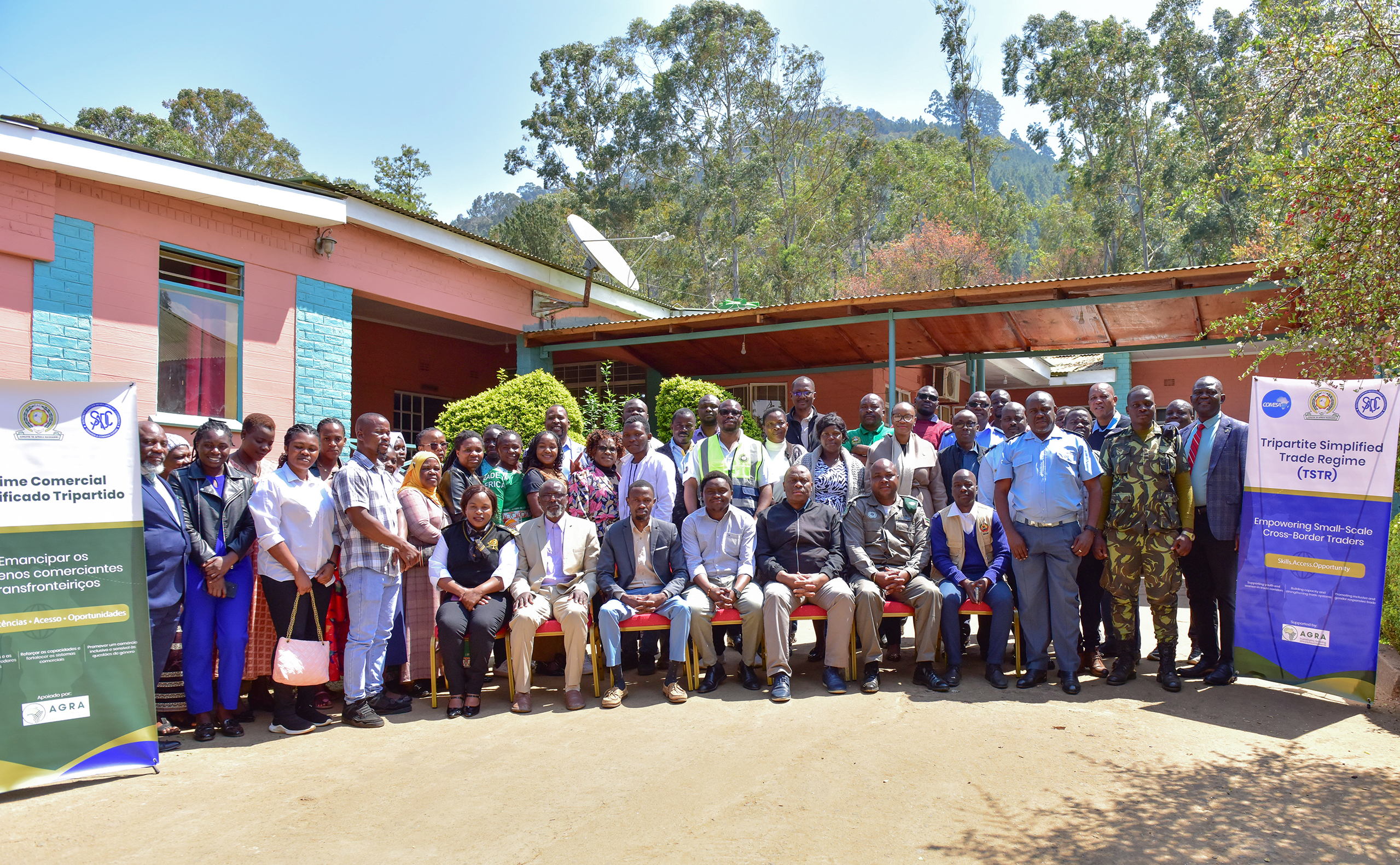
Small-Scale Cross-Border Traders (SSCBTs), the majority of whom are women and youth, have welcomed efforts by the COMESA-EAC-SADC Tripartite to simplify and facilitate trade between communities in Malawi and Mozambique through the Tripartite Simplified Trade Regime (TSTR).
The sentiments emerged during capacity-building workshops conducted at the Chiponde–Mandimba and Dedza–Calomue border posts respectively, aimed at strengthening the capacity of border officials, traders and other stakeholders to support the effective implementation of the TSTR and facilitate legitimate small-scale cross-border trade.
The Chiponde–Mandimba engagement, held from 8–9 September 2026, covered the border posts linking Mangochi District in Malawi with Mandimba District in Niassa Province, Mozambique. The second engagement, held from 11–12 September 2026, focused on the Dedza–Calomue border posts, linking Dedza District in Malawi with Angónia District in Tete Province, Mozambique.
The programme brought together customs and revenue authorities, immigration, agriculture, port health and police/ security officials, clearing agents, trade officials, cross-border traders and other key stakeholders. Discussions focused on practical measures to make trade simpler, inclusive, more transparent and more efficient, while strengthening coordination among border agencies.
The TSTR is a flagship trade facilitation instrument under the COMESA-EAC-SADC Tripartite Free Trade Area (TFTA), aimed at simplifying cross-border trade procedures and improving market access for small-scale traders. It contributes to the broader continental and regional integration agenda and is supported technically and financially by the Alliance for a Green Revolution in Africa (AGRA).
Speaking during the discussions, Mr Ovilera Phelani, Trade Officer in the Ministry of Industrialisation, Business, Trade and Tourism of the Republic of Malawi, representing the Director of Trade in Goods, underscored the longstanding trade, economic and social ties between Malawi and Mozambique.
He noted that cross-border trade is central to the livelihoods of communities along the shared border and contributes to strong people-to-people relations between the two countries. Mr Phelani said the TSTR provides an important opportunity to deepen these relations by making trade more predictable and accessible, while improving communication, information-sharing and coordination between border authorities.
Mr Agostinho Luís Fernandes, Commander of the Border Police Battalion of Mandimba for the Republic of Mozambique, emphasised the importance of cooperation between the two countries in facilitating legitimate cross-border trade. He stressed the need to balance trade facilitation with security and regulatory compliance, including effective measures to prevent the movement of prohibited, counterfeit and other illicit goods.
Dr Rinaldo Mendiate, Acting Senior Programme Officer for Trade at the SADC Secretariat, and Mr Rangarirai Machemedze, Coordinator of the TSTR Project, reaffirmed the Tripartite's commitment to supporting measures that facilitate trade, strengthen regional value chains and promote the participation of women and youth in regional commerce. They noted the important contribution of small-scale traders to trade, food security, household incomes and employment across the Tripartite region.
Traders highlighted practical challenges affecting small-scale traders, including language barriers, unclear trade procedures, limited access to information on products covered by the existing STR and concerns regarding the solicitation or payment of bribes by officials.
They also raised challenges associated with the valuation of goods purchased from surrounding border communities, where receipts are often unavailable. They noted that valuations determined by customs administrations often results in above than the purchase prices actually paid, hence increase the VAT payable, placing additional pressure on traders' profit margins.
Officials, meanwhile, highlighted the need for effective screening and inspection mechanisms to prevent abuse of the trading system, including instances where prohibited, counterfeit or potentially harmful products could be concealed among legitimate consignments.
The discussions further examined health and safety requirements for agricultural products, known as Sanitary and Phytosanitary (SPS) measures, as well as digital tools that can improve access to trade information, certification and other border procedures. Gender-responsive implementation was also addressed, with particular attention to barriers affecting women and youth participating in cross-border trade.
Importantly, the programme featured group discussions, allowing participants to examine the practical challenges affecting STR implementation and propose solutions. Participants shared experiences from their respective border communities and identified gaps and practical measures to make cross-border trade more efficient, transparent and inclusive.
The programme also included border visits by the Tripartite team and stakeholder consultations, enabling the observation of border processes firsthand and engagement with border management agencies. The visits provided practical insights into the experiences of traders and helped identify opportunities to strengthen implementation of the STR.
Through simplified procedures, improved access to information and stronger coordination at border posts, the TSTR seeks to reduce barriers to formal trade, expand market opportunities and create a more inclusive and efficient trading environment for small-scale traders, particularly women and young people.


